
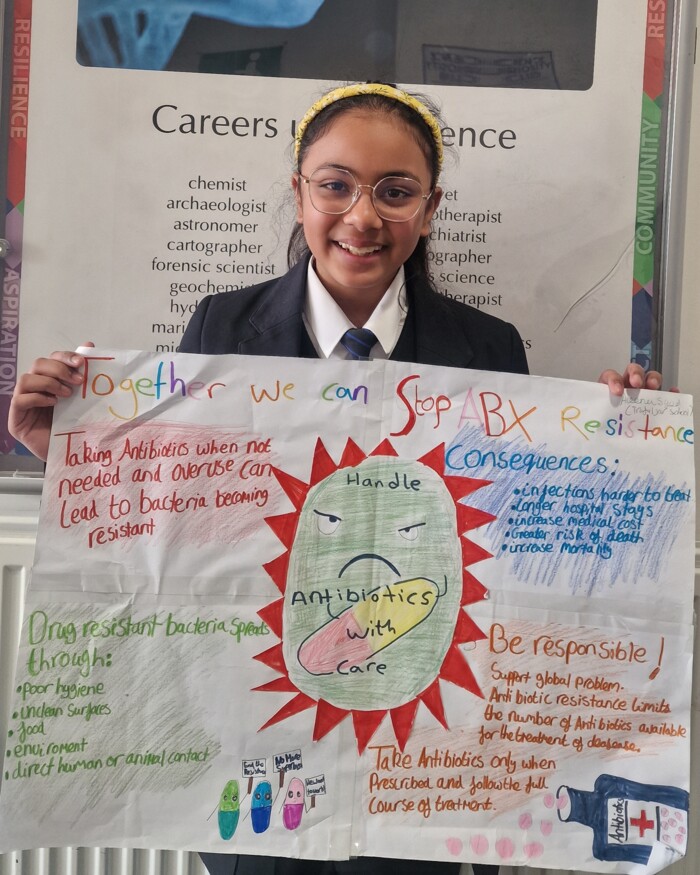
Two talented students from Portsmouth have been recognised for their creativity and commitment to raising awareness about antimicrobial resistance (AMR). Aleena was crowned winner of the Key Stage 3 category in the NHS Hampshire and Isle of Wight AMR Art Competition, with Izabella taking the runner-up spot.
Both entries brilliantly highlighted the importance of responsible antibiotic use and the dangers of antimicrobial resistance (AMR). This initiative helps young people understand why antimicrobial stewardship matters and empowers them to share these vital messages with their communities.
Every year more infections become harder to treat because of AMR. Antibiotics have saved millions of lives, but when they’re overused or misused, bacteria can learn to resist them. That means even common infections could become dangerous again. In 2019, 1.27 million deaths were linked to drug-resistant infections. If we don’t act now, this number could soar to 39 million by 2050.
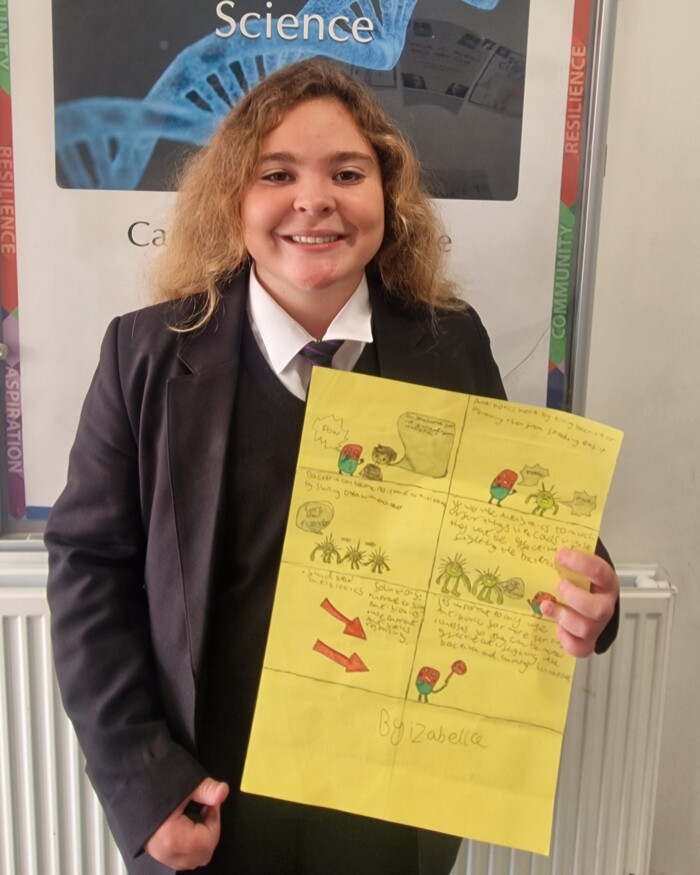
The art competition, held during World Antimicrobial Resistance Awareness Week (WAAW) 18-24 November 2025, challenged students to create a poster or comic strip explaining why responsible antibiotic use is vital and how AMR threatens global health. Aleena and Izabella impressed judges with their imaginative designs and clear messaging, helping to spread an important lesson - antibiotics are precious, and misuse can lead to infections that are harder to treat.
By engaging young people through art, the initiative aims to spark conversations in schools and homes about antimicrobial stewardship and the role everyone plays in protecting medicines for the future.
You can help to reduce the growth of AMR by following these simple rules:
- Don’t take antibiotics for colds and flu – they are not effective against viruses and these will normally pass swiftly on their own.
- Don’t save antibiotics for later – the course will only be effective if you take it as instructed.
- Do follow the advice and guidance of your healthcare professional – for example your pharmacist or GP. They will know the best course of treatment for your particular problem.


